Data-driven optimisation across four markets.
Lead UX/CRO designer on an ongoing programme of conversion optimisation across consumer loan, credit card, deposit, and car loan funnels in Denmark, Sweden, Finland, and Norway.
CRO inside a regulated banking environment
Santander Consumer Finance operates consumer lending across multiple European markets. In the Nordics (Denmark, Sweden, Finland, and Norway) they offer consumer loans, credit cards, deposit products, and car financing through dedicated digital funnels, each localised to its market.
The CRO programme at Flat 101 was an ongoing retainer engagement: continuous hypothesis generation, experiment design, test execution, and results analysis. My role was lead UX/CRO designer, responsible for the design side of the experimentation process, working alongside analysts, developers, and Santander's in-market digital teams.
Precision in a constrained environment
Banking is one of the most regulated digital environments you can work in. Every change to a funnel page goes through legal review. Certain UI patterns (urgency messaging, social proof, framing) require explicit sign-off. The scope for experimentation is narrower than in e-commerce, and the cost of a false result is higher.
Working across four markets means juggling four sets of constraints at once. Something legally fine in Denmark can be restricted in Norway. Copy that resonates with Swedish users can fall flat in Finland. Localisation here meant regulatory review and cultural read, not just translation.
Hypothesis-first, data-rigorous
Every experiment began with a structured hypothesis: a specific behaviour we observed or predicted, a proposed intervention, a measurable outcome, and a defined significance threshold. This discipline keeps experimentation honest, and in a regulated environment, it also provides the paper trail required for stakeholder sign-off.
The design work covered the full funnel: landing pages, product comparison pages, application forms, confirmation flows, and re-engagement touchpoints. Application forms (the highest-stakes, highest-drop-off stage) were a consistent focus. The behavioral economics principles most relevant here: reducing perceived effort, managing anxiety around sensitive financial information, using progress indicators and milestone framing to maintain commitment.
I was also responsible for communicating results clearly to Santander's teams across four markets: translating statistical results into actionable design direction and translating stakeholder feedback into testable hypotheses.
The work was structured around a three-pillar approach: deep analytics and session data to surface friction, heuristic and behavioral economics evaluation to understand why that friction exists, and disciplined hypothesis development to prioritise interventions by potential impact. The team operated on a structured sprint cadence with a dedicated Kanban board tracking each experiment from backlog through to live. Beyond designing variants, I maintained QA oversight on test implementations, validating that live variants matched approved specifications before results were collected. In a regulated environment where a misconfigured test produces misleading data, implementation fidelity is as much a design responsibility as the variant itself.
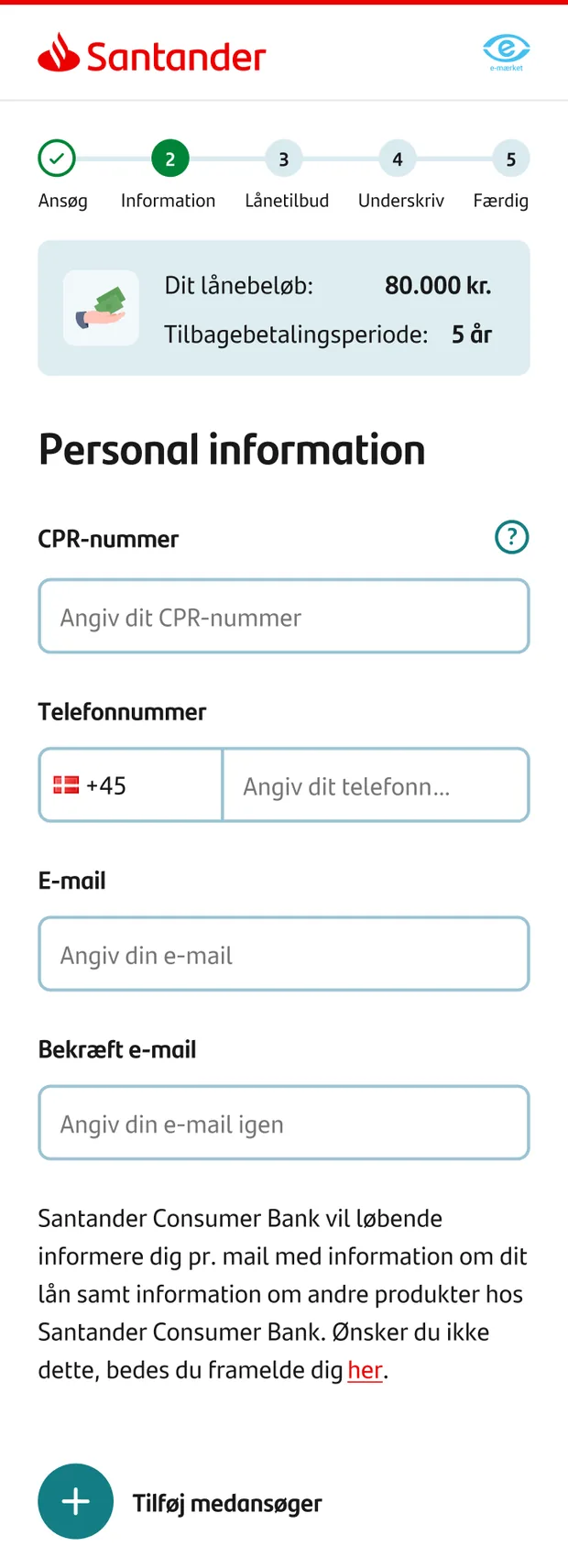
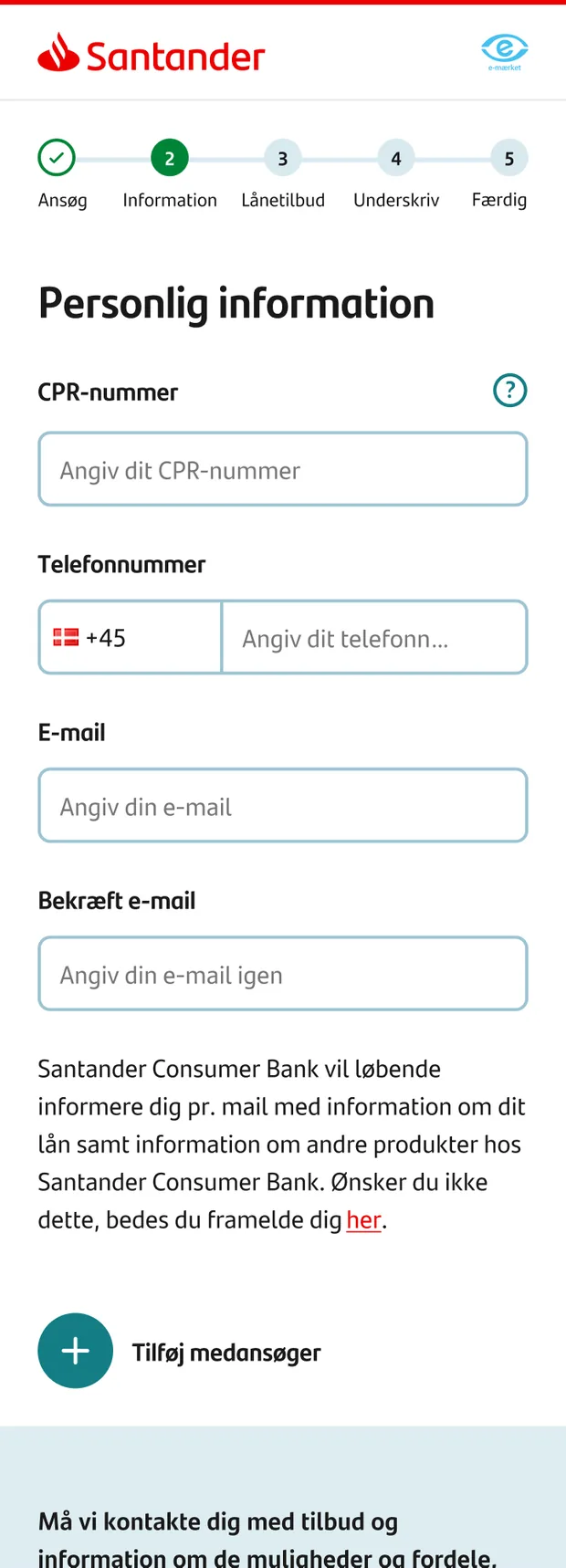
Consumer loan funnel · Step 2: Restructured field grouping and progress framing to reduce perceived effort at the highest drop-off point in the application flow.
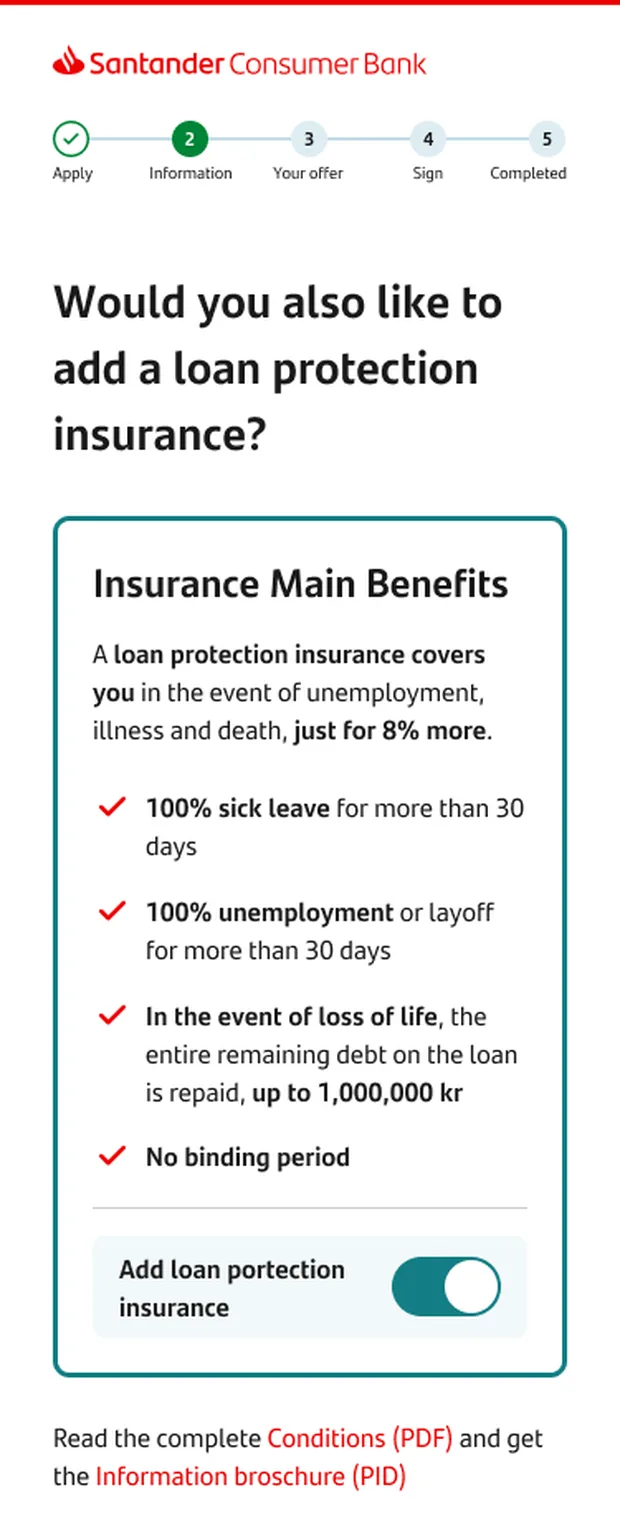
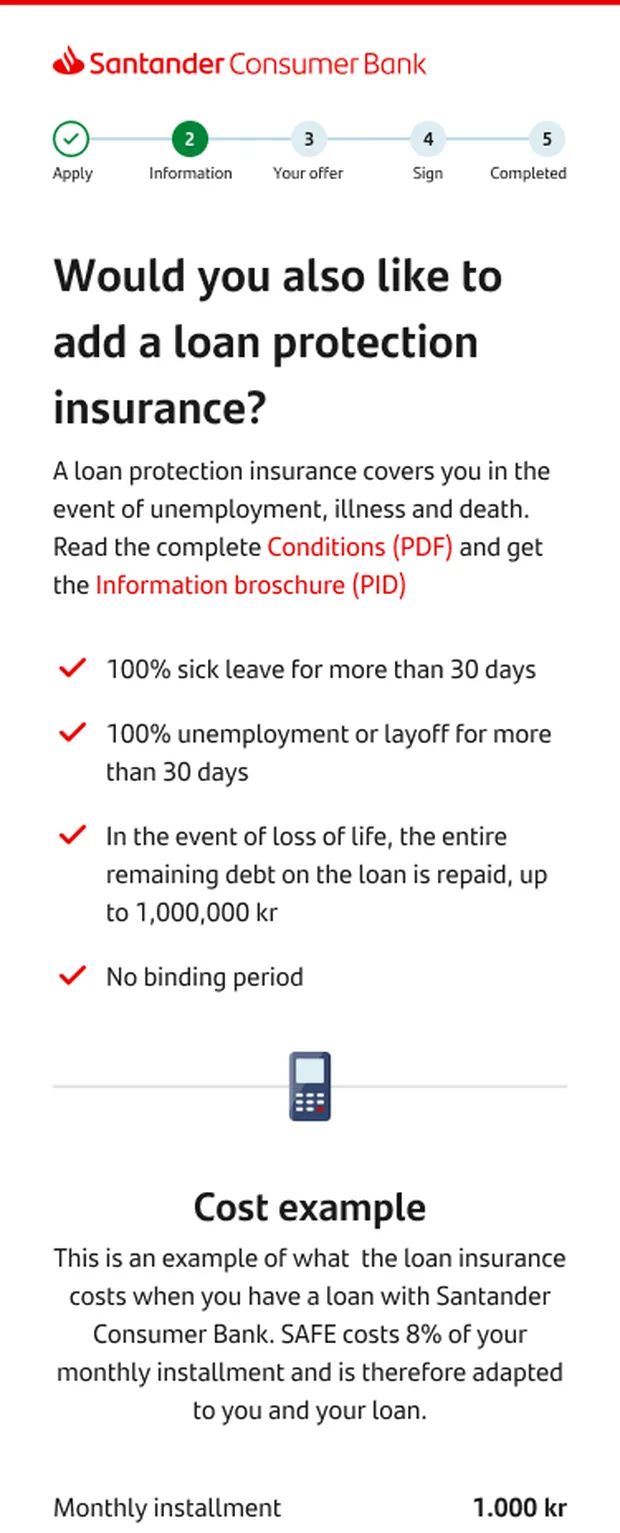
Insurance info page: Reordered trust signals and simplified pricing presentation. Regulated content constraints required legal sign-off across all four markets before the variant could go live.
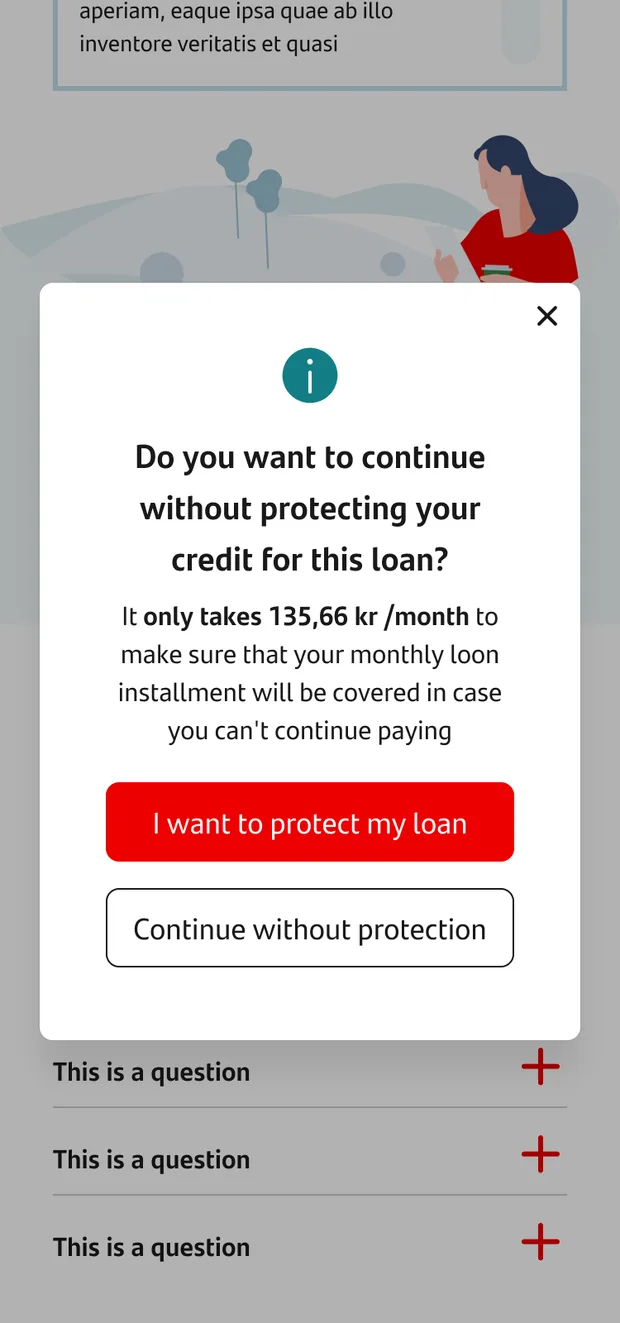
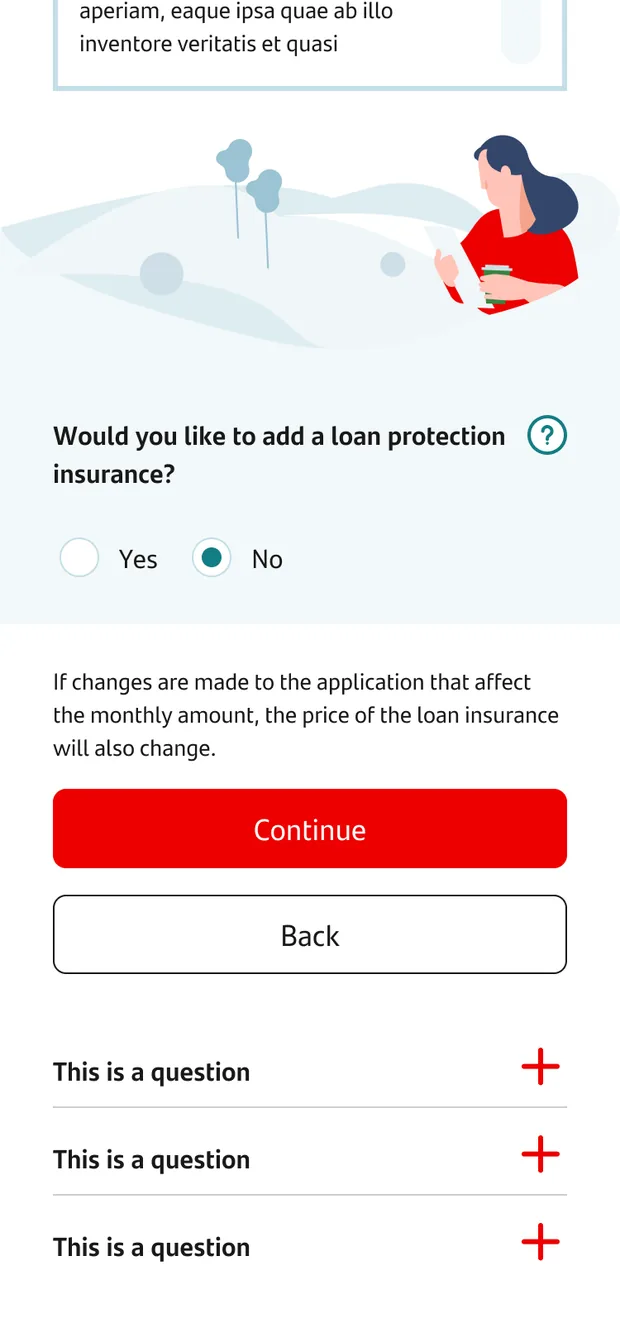
Insurance add-on nudge: Behavioral nudge applied at the insurance decision point in the loan funnel. Timing and framing derived from anxiety-reduction and commitment heuristics.
What multi-market CRO teaches you about design
Working across four markets simultaneously sharpens your understanding of what's universal and what's contextual in design. Some friction points appear consistently regardless of market: long form fields without inline validation, ambiguous progress indicators, unclear error messages. Others are deeply market-specific.
CRO work also teaches you to hold your own taste loosely. A design looking good and a design performing well line up often enough to be dangerous, you start assuming they're the same thing. When the data disagrees with your instinct, the data wins, every time.
Specific performance data for this engagement is subject to NDA and has not been published by the client.
Your hardest problem
is a good place to start.
Open to senior product design roles and selective consulting engagements, in English or Spanish.