A platform built from zero, live in twelve months.
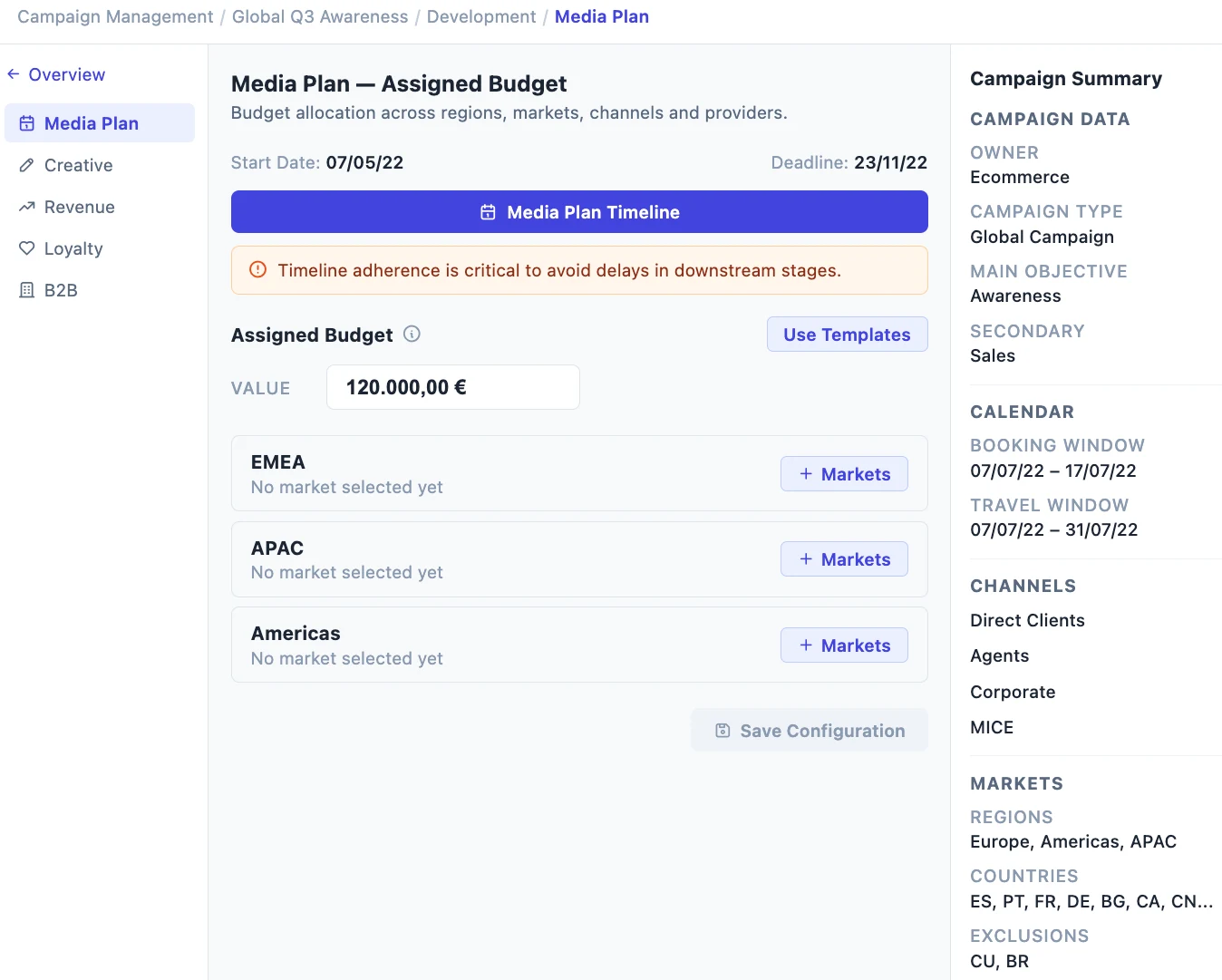
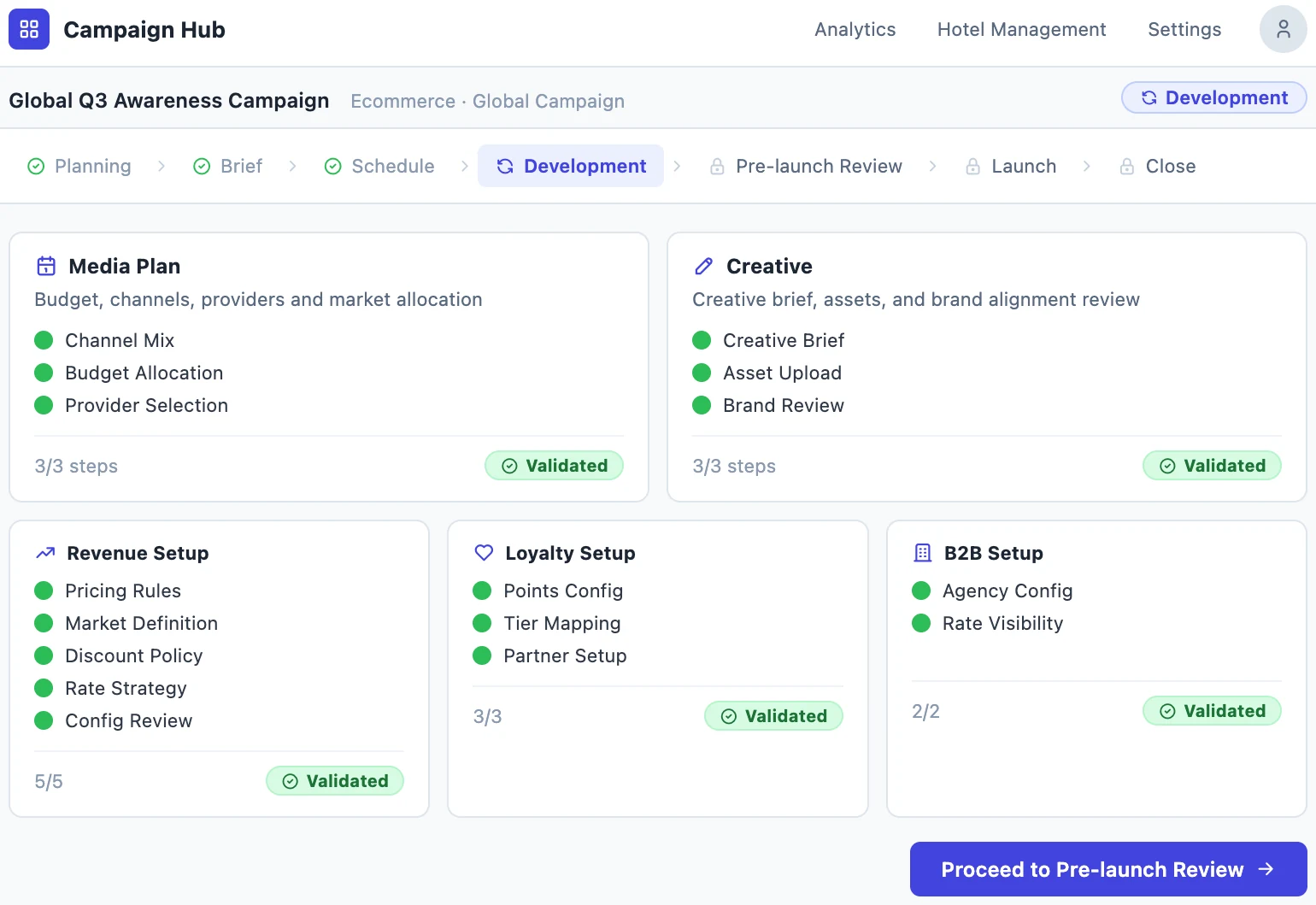
Conceptualised, designed, and optimised a marketing campaign management platform from scratch for Meliá Hotels International, from multi-department workshops with senior directors to a fully launched internal tool managing campaigns across all Meliá markets.
A large hospitality group with a coordination problem
Meliá Hotels International is one of Europe's largest hotel groups, with properties across more than 40 countries and a complex international marketing structure. Managing campaign activity across brands, markets, and departments relied on a combination of email threads, spreadsheets, and manual coordination, a system that worked until the volume of concurrent campaigns made it fragile.
The brief was to design an internal platform that gave Meliá's marketing teams a single place to create, review, approve, schedule, and track campaigns across their global portfolio. This was a zero-to-one product problem: nothing existed, and the requirements had to be discovered, not specified.
Director-level workshops, across departments
The engagement began with a structured discovery phase: multi-hour workshops with senior directors from multiple international departments at Meliá's headquarters. These weren't standard stakeholder interviews. They were working sessions designed to surface the mental models and workflow assumptions of people who had been managing campaigns manually for years.
The tricky part of this phase is that people rarely describe what they need. They describe the solution they've already pictured in their head. Senior stakeholders especially: ask what they want and you get a product spec, not a problem statement. My job was to listen to that spec, then work backward to the actual problem underneath it.
"Asking 'what do you want' gets you a wish list. Asking 'show me what breaks' gets you an actual project."
From those sessions, we derived a shared model of how campaigns actually moved through the organisation: from idea to brief, brief to asset, asset to approval, approval to scheduling, scheduling to performance review. Each stage had different owners, different blockers, and different information needs.

Minimum times framework. A strategic artefact I built from scratch based on deep knowledge of the campaign process, mapping the minimum lead time required per phase and development module. This became the architectural backbone every campaign setup was validated against.
Live in a year, refined over three
The platform went from first workshop to live in under twelve months, a timeline that required moving fast from discovery through architecture to a functioning product. The engagement then ran for a further two years of ongoing refinement and improvement, with the platform continuing to evolve even after my involvement ended. My role throughout was lead product designer, responsible for the UX architecture, interaction design, design system consistency, and the ongoing working relationship with Meliá's internal teams.
The platform evolved significantly from its initial design. Early testing revealed two distinct groups with fundamentally different needs: campaign creators who just needed to move fast without extra steps in the way, and marketing managers who needed visibility and control instead. This led to approval gateways, a visual campaign timeline view, and reporting dashboards, none of which were in the original brief, all of which emerged directly from user behaviour. The interface shifted from a content-management model toward a workflow-first structure: organised around campaign states, handoff actions, and role-based views tailored to each team.
Working with a rotating engineering team across the engagement also taught me a great deal about design-to-development handoff. Consistency in component naming, documentation of interaction states, and explicit specification of edge cases, the unglamorous work of design systems, became increasingly important as the team changed and institutional knowledge had to live in the documentation, not in people's heads. The engagement concluded with a structured handover: documentation, training sessions for the Meliá team, and a role-based access model that ensured each user type had the tools and interface they needed to manage and evolve the platform independently.

User permissions matrix. One of two reference documents I designed to specify access logic across 8 roles and 15 platform sections, used directly by engineers as the source of truth for backend permission configuration and frontend conditional rendering.
Live across all Meliá markets
The platform launched and is in active use across Meliá's international operations, managing live campaigns across all of the group's markets. It replaced the fragmented spreadsheet-and-email system that preceded it.
The specific performance numbers here are commercially sensitive, so I can't share them. What I can say is that a product that started life as a blank brief, shaped through workshops, launched inside a year, and refined over three more, is now in daily use, at scale, by the teams it was actually built for.
Your hardest problem
is a good place to start.
Open to senior product design roles and selective consulting engagements, in English or Spanish.