Brand ambition within platform constraints.
Full redesign of XTI's national fashion e-commerce platform, balancing brand ambition against the real constraints of a Magento migration and informed by competitive analysis, information architecture testing, and Hotjar behavioral data.


A national fashion retailer migrating platforms
XTI is a Spanish footwear and fashion brand with a national retail presence and a significant direct-to-consumer digital operation. The redesign was scoped to coincide with a platform migration to Magento, which meant the design work had to operate within the constraints of what Magento could deliver, not an ideal technical canvas.
People underrate how much the platform itself decides the UX before you've made a single design choice. Its component model, its URL structure, its filtering logic all draw the boundaries of what's even possible, whether anyone notices or not. Knowing those boundaries going in is the difference between a design that's exciting on screen and one that actually ships.
Behavioral data first
The discovery phase used Hotjar session recordings, heatmaps, and funnel analytics from the existing site, alongside a structured competitive analysis studying how fashion category leaders like Zara and Adidas handled navigation, filtering, and product presentation. The goal was to understand where XTI's existing experience was losing users and why, before proposing any changes.
Information architecture testing was also part of the process: card sorting and tree testing exercises conducted in Optimal Workshop to validate the proposed category and navigation structure before committing to high-fidelity design. IA problems discovered in testing are much cheaper to fix than IA problems discovered in live user data, especially on a Magento migration where structural changes post-launch carry significant development cost.


Balancing brand and conversion
Fashion e-commerce has a tension most other sectors don't deal with in quite the same way. The brand side wants editorial presence and a sense of aspiration; the conversion side wants clarity, product imagery front and center, and as little friction as possible between browsing and buying. Good fashion sites manage both, but only by being deliberate about exactly where brand gets to take up space and where it has to step back.
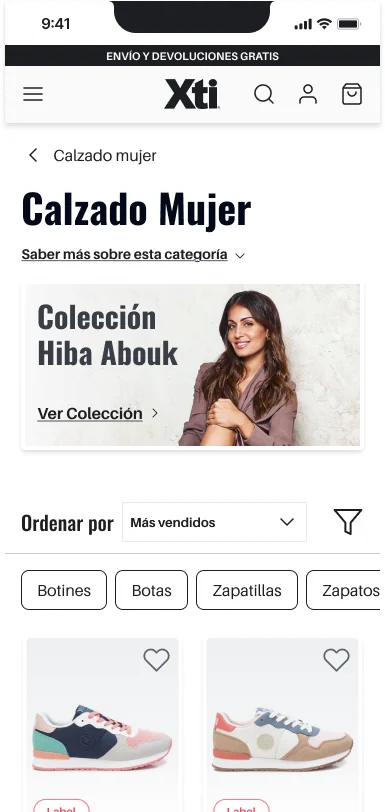
For XTI, the design decisions focused on the product listing page and product detail page, the two highest-traffic, highest-drop-off stages in any fashion funnel. Filtering and sorting UX, product image presentation, size selection, and the add-to-cart interaction were all redesigned with conversion data as the primary success measure.
The creative direction took cues from fashion editorial: clean layouts, generous whitespace, typography-led hierarchy, and product photography given room to breathe. That register was achievable within Magento's constraints because it relies on restraint rather than technical complexity. Developer collaboration was embedded from the start: involving the technical team early meant understanding what would perform within Magento's template model and avoiding patterns that would require expensive custom development.


Platform constraints are a design brief, not an obstacle
The experience of designing within a specific platform constraint, knowing what's possible and what isn't before starting, is valuable in a way that isn't obvious until you've done it. It eliminates a large category of wasted design work: the elegant solution that can't be built, the interaction pattern that the platform doesn't support.
It also changes what question you're actually answering as a designer. Not "what's the ideal UX here," in the abstract, but "what's the best UX I can build given what this platform will actually let me do", a less flattering question, but the one that matters when the project has to ship.
Specific performance data for this engagement is subject to NDA.
Your hardest problem
is a good place to start.
Open to senior product design roles and selective consulting engagements, in English or Spanish.